


Scrap car market trends and how value is calculated
Key points
- Most scrap value comes from the recoverable metal in your vehicle. Scrap metal prices change daily, so any estimate reflects the market at the time it was quoted.
- Keeping high-value parts such as the engine, gearbox, and catalytic converter intact can help you achieve a higher payout.
- If your car still has market value beyond its weight in metal, selling it may return more than scrapping. A free car valuation will give you a useful comparison point before you decide.
Scrap value is driven primarily by the global price of metals such as steel, aluminium and copper, which can shift from one week to the next. The condition and completeness of your vehicle at the time of sale also plays a significant role.
That said, there are ways to estimate the scrap value of your car and understand whether scrapping is the right route for you.
This guide outlines current market conditions for scrap cars in the UK, explains how scrap value is calculated, and gives you the information you need to decide whether scrapping your vehicle makes financial sense.
Curious about how much cash you could get for your 'scrap' car? Enter your reg and mileage into our free 'scrap' car valuation tool.
Get a free valuation
Please note: This article is intended as a general guide only. Rules and regulations are subject to change. Always check the latest guidance on GOV.UK or contact the relevant authorised treatment facility (ATF) before taking action.
Current market trends for scrap cars
Scrap car prices in the UK are subject to ongoing fluctuation, reflecting shifts in global metal demand, industrial activity, and trade conditions.
According to scrap car recycling industry data, the average scrap car price in May 2026 was £252.
Looking back across 2025 as a full year, the market was notably stable:
- 2025 annual average: £251
- Just £15 separated the lowest and highest paying months of the year.
- December 2025 closed at £256, matching December 2024 and just £1 below July, the highest month of the year.
Global metal demand
- The UK exports between 70% and 80% of all scrap metal collected each year, meaning prices offered to UK sellers reflect international market forces rather than domestic conditions.
- Steel mills are the primary buyers of scrap metal globally. Their demand rises and falls with activity in construction and automotive sectors, the two industries they predominantly supply.
- When those sectors are strong, mills buy more scrap and prices rise. When demand softens, prices follow.
- Since the value placed on your car at an authorised treatment facility (ATF) is based on the weight of its recoverable metal, these global movements can have a direct effect on the quote you receive.
The average age of UK cars
According to SMMT data published in April 2026, the average age of a car on UK roads has risen to 9.7 years, with a record 45.7% of the car fleet now over a decade old.
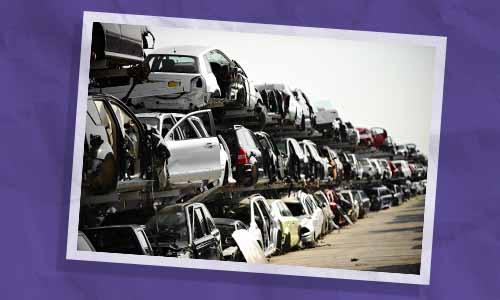
At the point of scrappage, vehicles tend to be considerably older. Scrap car recycling industry data recorded the average age of a scrapped car in 2025 at 17.5 years, with the average mileage at 125,000 miles.
This means a high volume of popular models registered in the late 2000s and early 2010s, including the Ford Focus and Vauxhall Astra, currently make up the bulk of end-of-life vehicles reaching scrap yards.
The shift between salvage and scrap
Several years of constrained new vehicle supply have kept the scarcity of used cars high, sustaining strong demand for quality used parts.
According to the ifndautoparts UK Used Automotive Parts Market Intelligence Report for Q3 2025, a vehicle with intact major mechanical components can be worth considerably more than its weight in metal alone.
Engines represented just 2.4% of available used parts inventory against 14.1% of demand, with individual units reaching £7,495 at the top of the market.
Gearboxes are scarcer still at just 1.3% of inventory. Both figures sit against a current average scrap car value of £252, demonstrating the significant value a complete drivetrain can add before a vehicle is committed to the scrap pile.
Vehicles with these components intact can command significantly more than their weight in metal alone. It is worth considering whether you could get more by selling before committing to a straight scrap.
Fuel type trends
In a 2025 annual report, petrol cars accounted for 59% of vehicles scrapped, diesel for 40%, and hybrid and electric vehicles for the remaining 1%.
While hybrid and electric scrappage volumes are currently very low, they are expected to rise over the coming years as early-generation low-emission vehicles reach the end of their useful lives.
How is scrap car value calculated?
Scrap car value is determined by three factors: the current price of scrap metal, the weight of the vehicle, and its condition. Since all three move independently, there is no reliable fixed price guide, and any figure reflects the market at the time it was quoted.
- Scrap metal prices move with global demand from industries like construction and manufacturing. Scrapping when demand is high is likely to return a better price.
- Vehicle weight is the primary calculation basis, as scrap dealers price per tonne. A heavier vehicle will generally attract a higher offer, which is why larger cars, SUVs, and vans tend to return more than small hatchbacks.
- Condition affects the final figure significantly. A car with all its original parts will attract a better price than one that has been stripped. High-value components such as the catalytic converter, engine, gearbox and alloy wheels can add meaningfully to the total, especially if they are in good condition.
Calculating an accurate figure in advance is difficult. Offers are based on a mix of ferrous and non-ferrous metal content, vehicle condition, and local market rates.
As the per-tonne rate an ATF will pay on any given day is not publicly listed and varies by location, the only reliable way to get an accurate figure is to request a quote directly.
Visit gov.uk/find-vehicle-scrapyard to find a licensed ATF near you.
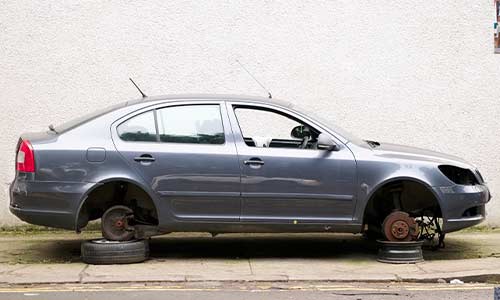
If essential parts such as the engine, gearbox, bodywork, or wheels have been removed, GOV.UK confirms the ATF is entitled to apply a deduction.
Selling your car vs. scrapping
Scrapping and selling your car are not the same thing – and the amount of cash you get can differ considerably.
When you scrap a car at an ATF, the offer is based primarily on the weight of recoverable metal. If your car still has market value beyond its metal content, a scrap quote is unlikely to reflect what it is actually worth.
A free car valuation from webuyanycar shows you how much cash you could get, helping you make an informed decision.
Our valuations are based on current car market pricing rather than metal weight, and we buy cars in any condition, including non-runners and 'scrap' vehicles.
Here's how our selling process works:
- Get a free 'scrap' car valuation. Enter your registration and mileage into our free car valuation tool. Provide as much detail about your motor's condition and history.*
- Book your appointment. Choose a date, time, and branch to suit you. With over 550 branches nationwide, your nearest branch is never far away.
- Sell your car. Take your car to your chosen branch and the buyer will confirm your valuation. Happy to sell? We'll send the cash to your bank.
Please note: If your car is not in roadworthy condition, you'll need to arrange for it to be taken away after your webuyanycar appointment, as we don't offer a vehicle collection service. We recommend contacting a local vehicle transporter.
*This is not a strict requirement, as the buyer will inspect your car in person before making a final offer, but is recommended to ensure an accurate quote.
Is van scrap value calculated differently than for cars?
No, the same three factors apply: current scrap metal prices, vehicle weight, and condition. Since vans are typically heavier, scrap payouts generally sit higher.
Just as with cars, a van with intact major components can be worth significantly more than its weight in metal alone.
Before settling on a scrap quote, find out what your van could be worth with webuyanyvan. Here's how it works:
-
Get a free van valuation. Enter your registration and mileage at webuyanyvan.com and provide details of your van's condition to obtain a quote.
- Book your appointment. Any webuyanycar branch will accept your van in any condition. Choose from over 550 branches nationwide.
- Sell your van. The process is identical to selling a car. Take your van to your chosen webuyanycar branch. The buyer will inspect your van and make a final offer. If you're happy to sell, we'll set up your payment.
Biggest factors that will inform whether you should scrap your car
- Repair costs versus market value: If the cost to repair your motor to roadworthiness exceeds the potential resale value, scrapping can be a viable option.
- Mechanical completeness: A car missing its engine, gearbox, bodywork, or wheels may incur a fee at the ATF.
- Logistics: If the vehicle cannot be driven, factor in the cost of getting it to an ATF or your local webuyanycar branch.
Frequently Asked Questions
The base calculation is kerb weight in tonnes multiplied by the current per-tonne scrap metal rate.
This figure is then adjusted upwards if high-value components are intact, most notably the catalytic converter, which contains precious metals including platinum, palladium and rhodium - and downwards if parts are missing or the vehicle requires collection.
You can find an accurate value by entering your registration and mileage into the webuyanycar online valuation tool. This provides a useful benchmark when comparing quotes from local scrapyards.