



The UK’s driverless car trust gap: drivers let the car brake and steer, but draw the line at driving
Published June 24, 2026
More than four in ten UK adults already drive a car that can hold a lane, keep a safe distance or brake in an emergency. Only 22% of road users would trust one to handle the entire journey, according to a HPI survey of more than 2,000 UK adults.
That gap matters now. On 22 May 2026, the UK government opened applications for companies to run self-driving taxi, bus, and private-hire services (private-hire vehicles are cars booked through a platform or operator, as opposed to black cabs hailed in the street). Passengers could be booking rides through approved operators later this year.
As one of the UK's largest vehicle buyers, webuyanycar has already seen this kind of shift play out with electric cars, which now make up a growing share of the vehicles purchased at its branches. It is anticipated that as autonomous vehicles enter the mainstream over time, they too will find their way into the used car market. Understanding how public trust forms, and where the barriers sit, matters to the industry right now.
A separate YouGov survey of 1,000 GB adults paints a similarly cautious picture. 79% said they trusted driverless taxis "not very much" or "not at all," and only 17% expressed any degree of trust, with just 3% trusting them "a great deal." 85% would still choose a human driver at the same price and convenience, and nearly six in ten (59%) said they would not feel comfortable in a driverless vehicle under any circumstances.
Get a free valuation
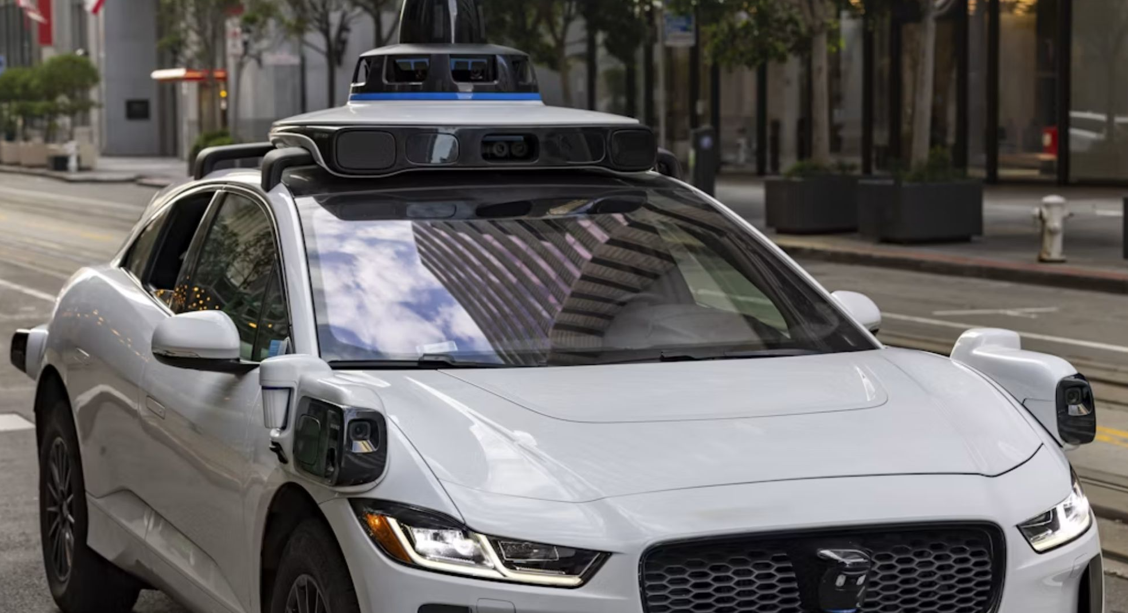
The numbers at a glance
- More than 40% of UK adults drive vehicles with semi-autonomous features such as lane assist, adaptive cruise control, and automatic emergency braking, but only 22% of road users trust a driverless car (HPI, February 2025).
- 79% of Britons trust driverless taxis "not very much" or "not at all," 85% would choose a human driver at equal price and convenience, and 59% would not ride in one under any circumstances (YouGov, October 2025).
- Losing control is the single biggest concern, cited by 57% of respondents (HPI).
- In San Francisco, support for autonomous vehicles rose from 44% in 2023 to 67% in 2025, while opposition fell from 51% to 29% (GrowSF, July 2025).
- The UK government opened applications for self-driving taxi, bus and private-hire pilots on 22 May 2026. Passengers could book later in 2026, subject to operator approval and local consent (GOV.UK).
Why the hesitation? Control, not curiosity
The strongest signal from the research is not that people reject automation; they draw a line between assistance and surrender. Lane assist or automatic emergency braking leaves the driver in the seat. A fully driverless journey asks them to hand over judgement, timing, and accountability all at once.
The HPI study saw losing control top of the list of concerns, cited by 57% of respondents. Other fears follow closely: 49% are worried about the behaviour of other road users around a driverless car, 41% about accidents, 38% about road conditions, and 35% about the reliability of the technology itself.
Only 15% believe driverless cars will make UK roads safer, and just 8% think manufacturers have done enough research to convince them the technology is safe. The issue is not a lack of awareness. It's a lack of proof that feels personal enough to overcome the instinctive discomfort of sitting in a car with no one at the wheel.
Richard Evans, webuyanycar's Head of Technical Services, said:
“Many drivers already feel confident handing over specific tasks to their car. They trust it to hold a lane or brake in an emergency. What they are not yet comfortable with is handing over everything at once.
“San Francisco shows us what closes that gap. Two years ago, more than half of residents opposed driverless vehicles. Today, two-thirds support them. What changed was not the technology but experience: people took a ride, arrived safely, and changed their view.
“The UK is at the start of that same curve. What is missing is firsthand experience. Once people start taking those rides, the trust gap has a real chance of narrowing.
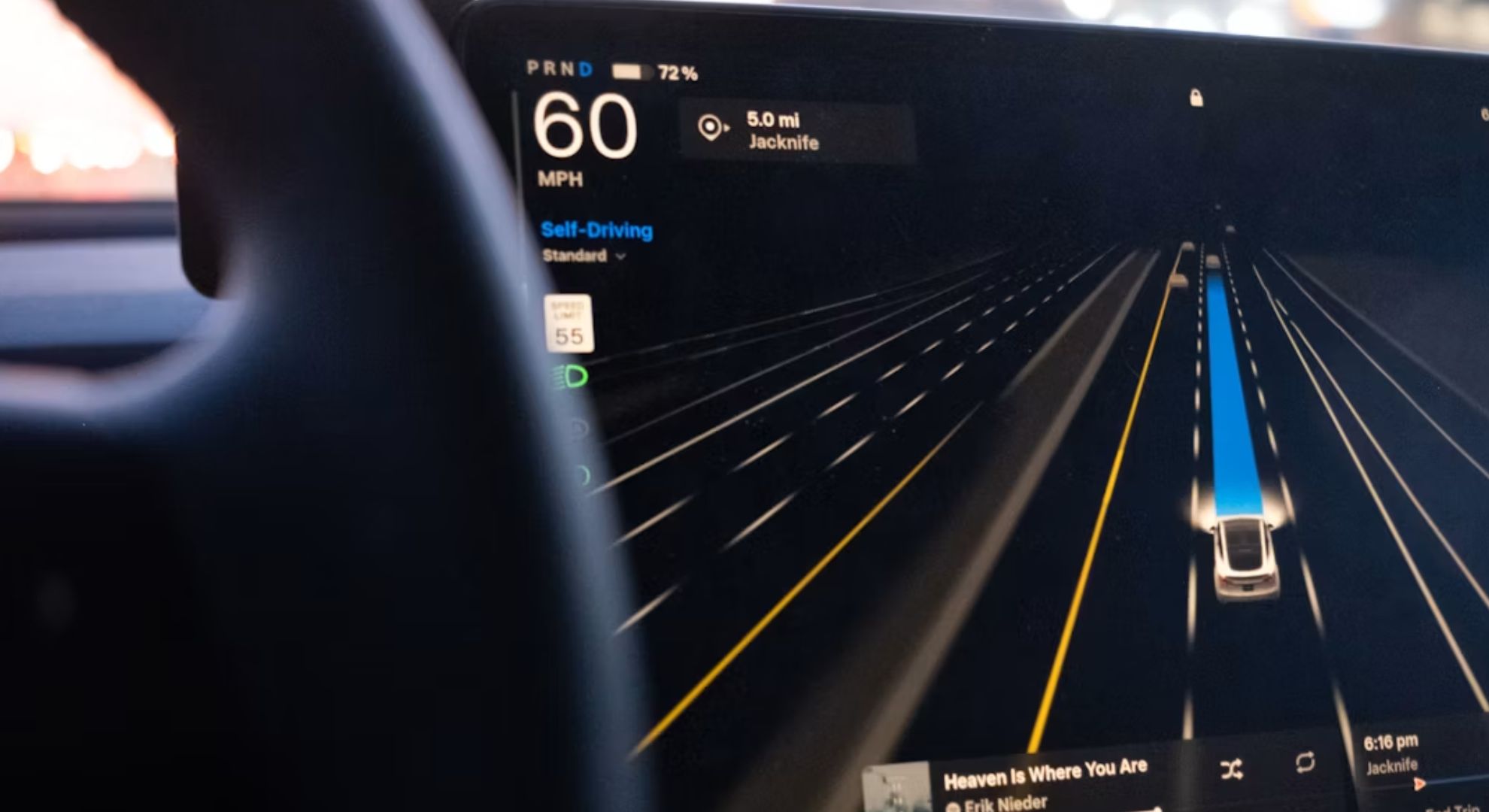
Are self-driving cars legal in the UK?
Fully unsupervised self-driving for privately owned cars is not yet legal.
However, supervised testing has been permitted on UK roads since the government published its first Code of Practice for automated vehicle trialling in 2015.
The framework for public passenger services without a safety driver is now being opened through the pilot scheme (see "What to watch" below).
The Automated Vehicles Act 2024 explained
The Automated Vehicles Act 2024 sets out how responsibility works when no one is behind the wheel:
- Every authorised self-driving vehicle has an authorised self-driving entity (ASDE) responsible for how it behaves in self-driving mode.
- Vehicles designed to self-drive entire journeys must also be overseen by a licensed no-user-in-charge (NUiC) operator, responsible for roadworthiness, insurance, and incident response.
- When a vehicle is operating in self-driving mode, liability for how it drives shifts from the person in the car to the ASDE.
- Insurers remain central to compensating anyone affected, under the existing Automated and Electric Vehicles Act 2018, which continues to apply.
The lesson from San Francisco: Familiarity can shift the mood
San Francisco offers the clearest real-world evidence that public attitudes to driverless vehicles can change, and quickly.
Polls commissioned by GrowSF tracked the shift. In September 2023, more San Francisco residents opposed fully autonomous vehicles than supported them: 51% opposed, 44% in favour. By July 2025, that picture had reversed: 67% now supported autonomous vehicles operating and carrying passengers, while opposition had fallen to 29%.
The shift was attributed to visibility and direct experience. As autonomous vehicles became a regular sight on city streets and the service carried more passengers, resistance faded. The strongest opposition collapsed: the share of voters who "strongly opposed" fell from 35% to 16%.
Safety data plays a role too. Research authored by Waymo's safety team, published in the peer-reviewed journal Traffic Injury Prevention, examined a total of 56.7 million miles of fully driverless operation accumulated over six years (2019 to January 2025) across Phoenix, San Francisco, Los Angeles and Austin.
The study found statistically significant reductions in crashes compared to human drivers: 82% for both cyclists and motorcyclists, and 92% for pedestrians. No category showed a statistically significant increase in crash rates.
Who is more open to driverless cars?
The trust gap is not evenly spread. HPI's research found clear generational and regional differences that are likely to shape where the UK's first public services gain traction.
Younger adults are more receptive: a third (33%) of 18-to-26-year-olds feel at ease with driverless cars, compared with 17% of those aged 55 to 64 and just 12% of those over 65. Men (28%) are more trusting than women (16%), and 30% of men described themselves as excited about the prospect, compared with 18% of women.
Regionally, Londoners are the most trusting at 21%, followed by the East of England at 19% and the West Midlands at 18%. Wales records the lowest confidence at 9%.
That split matters for the rollout. Early take-up is unlikely to be national, uniform, or instant. It is more likely to begin where people already see the technology, where journeys are short and repeatable, and where the service can build a track record before asking every driver to become an early adopter.
What to watch: The UK rollout in 2026
The UK has permitted automated vehicle trials under a code of practice for years, but 2026 marks the shift towards public passenger services. On 22 May 2026, the government opened applications for operators to run taxi, bus, and private-hire self-driving vehicle pilots, with local transport authorities such as Transport for London (TfL) also needing to provide consent.
The Department for Transport has framed the pilots partly around safety, noting that human error currently contributes to 88% of collisions on UK roads. Operators will need to pass approval checks, including safety assessments, and cyber-security requirements, before passengers can book.
Several operators are already positioning for the UK market. Wayve and Uber have announced supervised passenger trials in London. Waymo has said it intends to offer rides in London in 2026. Oxa has deployed autonomous technology at Heathrow in live airport traffic for baggage logistics operations.
The fuller commercial regime is expected to develop alongside secondary legislation, with full implementation of the Automated Vehicles Act anticipated in the second half of 2027.
The electric vehicle parallel: The UK has done this before
The rise of electric vehicles (EVs) in the UK shows how quickly unfamiliar technology can become ordinary once the public sees it working.
Early objections centred on "range anxiety": the fear that the battery would run out mid-journey. When the first mass-market EVs arrived around 2011, that concern had substance.
The original Nissan Leaf carried an official test range of just over 100 miles, but real-world performance, particularly in cold weather, often fell short of that figure. The public charging network was small and patchy. Today:
- The average new EV offers a range close to 300 miles. (SMMT, 2025)
- The UK's public charging network has grown to more than 121,000 devices. (zapmap)
- Two million EVs are now registered, with battery-electric cars accounting for more than one in four new registrations, (SMMT, January 2026)
Richard Evans, webuyanycar's Head of Technical Services, sees a familiar pattern:
“With EVs, the technology was only part of the story. Trust had to catch up, and that came through visibility and familiarity. Range anxiety eased once EVs became a normal sight on people's own streets. Driverless vehicles could follow a similar path, if the same obstacles are navigated successfully.
“If the rollout is handled well, the wider opportunity could go beyond convenience. Human error contributes to 88% of road collisions. For people who cannot drive today because of age, disability, or medical conditions, autonomous vehicles could open up a level of independence that hasn't been available before.
“The legal framework is in place. How it plays out on the road will depend on the experience those first passengers have.
About the data
The principal datasets are:
- HPI - Driverless Cars Research UK; survey of 2,000+ UK adults, published February 2025
- YouGov - 1,000 GB adults, fieldwork October 2025, weighted by age, gender, education, region and social grade
- GrowSF - San Francisco voters, July 2025
- Waymo - Peer-reviewed research published in Traffic Injury Prevention (2025)
- SMMT - UK new car registration data and EV market analysis (2025–2026)
- UK government, legal and regulatory data is sourced to GOV.UK and legislation.gov.uk. Operator announcements are sourced to the named companies. All figures should be rechecked before publication if the piece is held beyond June 2026.