



Clean Your Car Like a Pro This Summer: Reach the Problem Areas Most Miss!
While the outside of your car might scrub up nicely after a run through the car wash, the interior can be a different story.
So, which interior areas are most frequently neglected by drivers cleaning their motors?
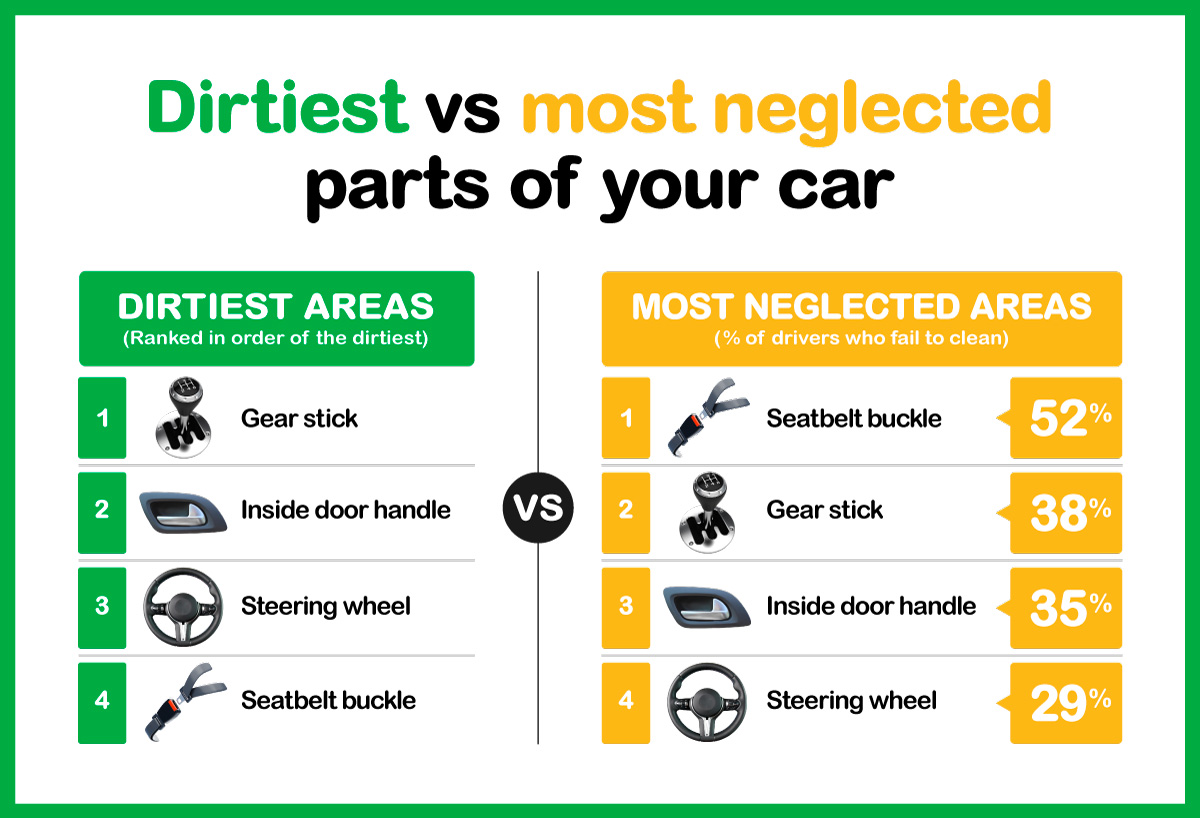
Working with a consultant microbiologist, webuyanycar swabbed 10 everyday cars. The gear stick topped our list of the surfaces most overlooked by home car cleaners, followed closely by door handles, steering wheels, and seatbelt buckles.
That's why a proper spring clean goes beyond appearances. It's also about hygiene, comfort, and protecting your car's condition after months of winter driving, everyday clutter.
A thorough clean can also boost kerb appeal and help improve your car's value, making it a worthwhile step when preparing your car for resale.
Get a free valuation
Why cleaning your car matters when selling
Successful dealerships invest significant time in thoroughly valeting cars before putting them on the forecourt. They know that a clean, well-presented vehicle attracts more interest, builds trust, and can justify a higher asking price.
Here are a few key reasons to prioritise presentation before selling your car:
- Cleanliness is a key valuation factor and can help attract stronger offers.
- Removing clutter highlights the car's true condition and best features.
- A clean presentation can instil confidence that the car has been well looked after.
- If you're selling privately, a clean car can help you achieve a quicker sale.
- Even a basic clean can improve kerb appeal and saleability without the need for costly repairs or detailing.
Exterior cleaning tips
Your car's exterior is the first thing people notice, so keeping it clean can make a big difference to your car's appearance.
Wheels and tyres
Wheels and tyres pick up brake dust and other stubborn pollutants that can damage the finish if left to build up. Always clean them first and separately, so brake dust doesn't transfer back onto freshly washed paintwork.
Before you start, you'll need:
- A bucket of water
- A dedicated wheel cleaner
- A soft brush or wheel brush
- A sponge or cloth
Follow these steps:
- Start by rinsing with clean water to remove loose mud and debris before you begin cleaning.
- Apply a dedicated wheel cleaner. If needed, you can remove product with water or with a sponge and a bucket of soapy water.
- Use a soft wheel brush to loosen stubborn dirt and reach tight areas, such as between the spokes and around the wheel face.
- Rinse away the cleaner and any loosened mud, so no residue is left behind.
- Wipe away excess water to avoid water marks and leave a cleaner finish.
Pre-rinse and wash your car properly
Before you start, gather the following:
- A bucket of clean water
- Car shampoo
- A sponge or microfibre wash mitt
- A clean, dry microfibre cloth or towel
Using car-cleaning products designed for automotive finishes helps clean the paintwork safely. Household detergents can strip wax and dull the paint, so it's better to use a car-specific shampoo.
Follow these steps for a safe, effective clean:
- Use a hose or pressure washer to remove loose mud before you start washing. Pre-rinsing helps reduce the amount of dirt dragged across the paintwork.
- Wash the car with car shampoo and a sponge or microfibre mitt, starting at the roof and working down. This helps stop muddy water from upper panels running over areas you have already cleaned.
- Rinse your sponge or mitt in clean water as you go to help avoid reapplying mud to the paintwork.
- Once you have washed the whole car, rinse it again with clean water to remove shampoo and any remaining residue.
- Using a clean microfibre cloth or towel, carefully dry your car to leave a streak-free finish and help prevent water marks.
Tip: Avoid washing your car in direct sunlight or on hot panels, as water and soap can dry too quickly and leave streaks or water spots.
Windows and mirrors
Clean windows and mirrors improve visibility and help give your car a clear, streak-free finish.
Before you start, you'll need:
- A glass cleaner (car-specific or suitable household glass cleaner)
- A microfibre cloth (ideally two, one for cleaning and one for drying)
Follow these steps:
- Spray glass cleaner onto the window or a cloth to help control overspray.
- Use a clean microfibre cloth to wipe the glass in steady, overlapping motions, helping to remove residue effectively.
- Use a second dry cloth to buff the surface and remove any remaining streaks.
- If possible, lower the windows slightly to clean along the top edge, then wind them back up and finish the rest of the glass.
- Repeat the process on mirrors and interior glass, as dust and film on the inside can also reduce visibility.
Avoid these exterior washing mistakes
- Washing in direct sunlight can cause water spots and streaks.
- Using washing-up liquid can damage the finish.
- Skipping the initial rinse stage increases the risk of scratches.
Interior cleaning tips
A clean interior makes your car look better, feel fresher, and appear better cared for, especially if you're planning to sell.
Focus on high-contact areas such as the steering wheel and gear stick, which are handled often but rarely cleaned properly.
Decluttering your car
Start by removing:
- Rubbish, bottles and wrappers
- Paperwork and receipts
- Personal belongings
- Items from compartments, seat pockets and the boot
This makes the cabin look cleaner and more spacious, helping buyers focus on the car's condition. Check carefully before selling, as anything left behind could be lost.
Vacuuming and upholstery care
Before you start, you'll need:
- A vacuum cleaner with nozzle attachments for tight spaces
- A fabric or upholstery cleaner, or leather cleaner for leather seats
- A soft brush or cloth
Follow these steps:
- Vacuum seats, carpets and footwells with a nozzle attachment to remove loose debris.
- Use smaller attachments under seats and along edges, where dust builds up.
- Apply a suitable cleaner for the material, using a cloth or soft brush.
- Gently work the cleaner into the fabric or leather, focusing on marks or stains.
- Let surfaces dry fully and avoid excess moisture to prevent damp or marks.
Tip: Regular vacuuming helps stop debris becoming embedded in fabrics and keeps your interior looking fresher for longer.
Dashboard and surfaces
Clean the dashboard, centre console and other high-touch surfaces regularly, especially the steering wheel and gear stick.
Before you start, you'll need:
- A microfibre cloth
- An interior or dashboard cleaner suitable for plastic, vinyl or leather
- A soft brush or detailing brush
- A vacuum or compressed air for tight spaces
- A protectant or conditioner, optional
Follow these steps:
- Remove dust with a microfibre cloth, vacuum or compressed air, focusing on vents, seams and crevices.
- Apply interior cleaner to a cloth, not directly onto surfaces, to avoid overspray on controls and screens.
- Wipe the dashboard, centre console and door panels gently, paying attention to marks or dust.
- Use a soft brush around vents, buttons and edges, where dirt tends to collect.
- Wipe away residue with a clean microfibre cloth for a smooth, natural finish.
- Apply a protectant if needed to help reduce fading, cracking and UV damage.
Tip: Regular light cleaning prevents build-up, keeping your interior looking good between deeper cleans.
Areas expert car dealers never overlook
Odour removal
Common car smells include:
- Musty or damp odours, often caused by moisture in carpets or upholstery
- Burning smells, which can point to brake, oil or engine issues
- Fuel or exhaust smells, which may indicate leaks or faults
- Air conditioning smells
- Some odours can be fixed with a thorough clean, while others may need further checks.
Simple ways to tackle odours include:
- Vacuuming seats and carpets
- Cleaning upholstery with suitable products
- Airing out the car
- Checking for damp areas or leaks
Visit our guide car smell causes and fixes to learn more.
Door shuts
Before you start, you'll need:
- A bucket of water with car shampoo or a mild cleaner
- A microfibre cloth or sponge
- A soft brush (for hinges and seals)
- A clean, dry microfibre cloth
Follow these steps:
- Wipe the area with a damp cloth or sponge to lift loose dirt before cleaning.
- Use a cloth or sponge with soapy water to clean the inner edges and panels.
- Use a soft brush around hinges, seals, and gaps to tackle buildup in tough-to-reach areas.
- Go over the area with a clean, damp cloth to remove residue.
- Finish with a dry microfibre cloth for a clean, streak-free result.
Boot space
Before you start, you'll need:
- A vacuum cleaner
- A cloth or soft brush
- A mild cleaner or soapy water
- Baking soda (optional, for odours)
Follow these steps:
- Take everything out of the boot, including mats, tools, and loose items. This makes it easier to clean thoroughly and ensures nothing is missed.
- Use a vacuum to remove dust and debris from the carpet and surrounding areas. Pay attention to corners and edges where grime tends to collect.
- Use a cloth or soft brush with a mild cleaner or soapy water to clean the carpet and interior surfaces. Gently work over any marks or stains.
- Sprinkle baking soda over any affected area, leave it for a short time, then vacuum it away.
- Wipe down edges and trim with a damp cloth to remove any remaining dirt and leave a clean finish.
Cup holders
Cup holders quickly collect sticky spills and crumbs, but they're simple to clean with a quick routine.
What you'll need:
- Vacuum or dry cloth
- All-purpose cleaner or warm soapy water
- Microfibre cloth or sponge
- An old sock (optional)
- Cotton buds or a soft brush (optional)
Follow these steps:
- Remove loose debris using a vacuum or dry cloth to avoid turning crumbs into grime.
- Clean removable inserts (if applicable): take them out, soak in warm soapy water, scrub, then dry fully before replacing.
- Apply cleaner to fixed holders and let it sit briefly to loosen sticky residue.
- Clean the holder using a cloth or sponge, or by wrapping an old sock around a cup and twisting it inside to reach all sides. Use cotton buds or a soft brush to clean around the edges and tight areas.
- Wipe and dry with a clean damp cloth, then dry completely to prevent residue building up again.
Pro tip: Add silicone cupcake liners or removable inserts to cup holders; they catch spills and make future cleaning much quicker.
Vents
Use compressed air or a soft brush, such as a clean toothbrush, to loosen dust from air vents, then vacuum or wipe it away. This removes dirt from tight crevices without pushing debris deeper inside.
Many drivers overlook this, but a specialist A/C cleaner or garage service can improve both air quality and smell.
Which areas are most neglected by car cleaners?
To find out what's lurking in everyday vehicles, webuyanycar partnered with a consultant microbiologist to swab ten used cars. The study focused on:
- Four frequently touched surfaces: the gear stick, inside door handle, steering wheel and seatbelt buckle
- Samples taken from each surface
- Cultures grown on agar plates
The results revealed a clear hierarchy, showing several key areas that are frequently overlooked or neglected by car cleaners.
How often should you clean your car?
Many UK drivers are reasonably diligent when it comes to car cleaning. Research by webuyanycar found that:
- 67% wash the exterior at least once a month.
- 61% clean the interior at least once a month.
As a general guide, aim to clean each area of your car at the following intervals:
| Area | How often to clean it | Why it matters |
|---|---|---|
| Exterior | Once a month, or sooner after road salt, bird droppings, tree sap or heavy mud | These can damage paintwork if left untreated. |
| Interior | Vacuum and wipe down once a month, with a deeper clean every few months | Helps keep dust and debris under control. |
| High-contact surfaces | Every one to two weeks | Steering wheels, gear sticks, door handles, seatbelt buckles and infotainment controls can quickly attract buildup. |
| Cup holders and storage areas | As needed, especially after spills | These areas often collect crumbs and dust. |
| Air vents | During your monthly interior clean | Helps reduce dust build-up and smells. |
| A/C system | Once or twice a year | A specialist clean can help keep the system fresh, ideally at the start of spring and before winter. |
Selling your motor? Get your free car valuation with webuyanycar
Whether you're sprucing up your car to sell or just curious what it's worth, you can get a free car valuation from webuyanycar in under 30 seconds.
Our process takes less than an hour from quote to sale, and you can sell at any of our 550+ UK branches with an average drive time of just 11 minutes.
Enter your reg plate and mileage to see how much you could get today!