Autumn Budget 2026: What does it mean for drivers?
Published October 28, 2026
Chancellor John Healey has just delivered the Autumn Budget, here's what motorists need to know. Richard Evans, motoring expert at webuyanycar, offers his perspective:
"With the Autumn Budget announcement comes important changes and updates for British motorists. The extension of the fuel duty freeze will be welcome news for millions of motorists who continue to face significant household costs. While electric vehicle owners also benefit from lower electricity bills, today's measures offer support to drivers regardless of what fuel type they use."
Get a free valuation
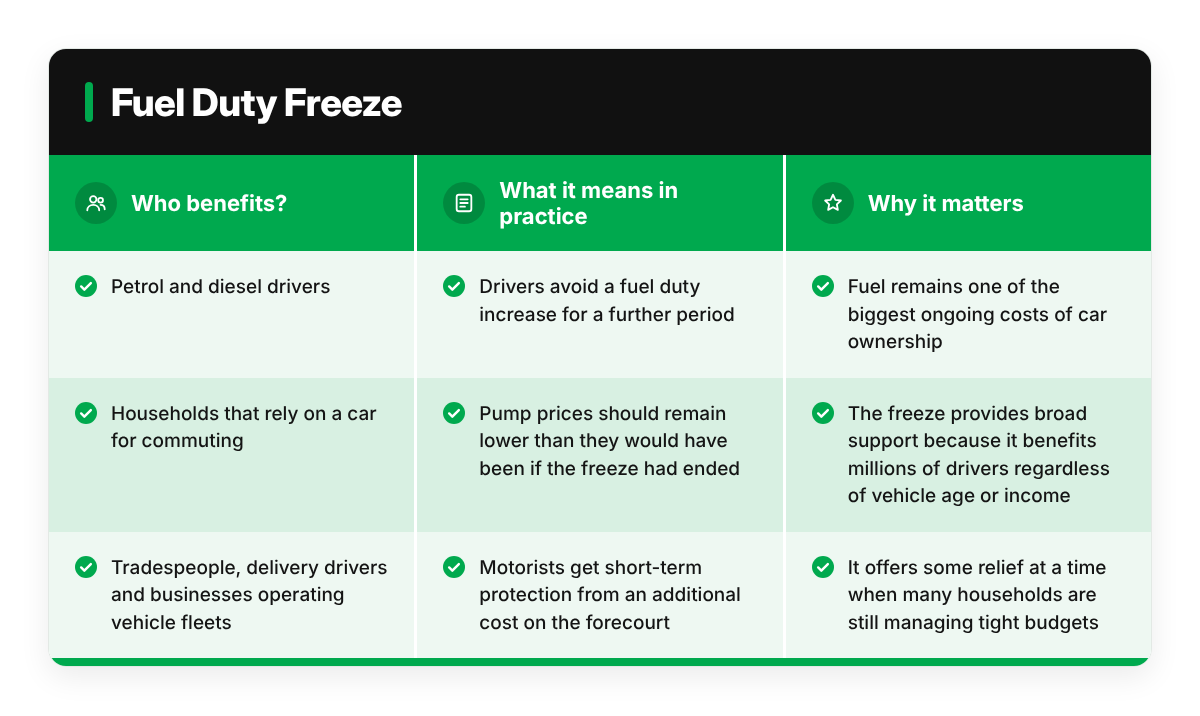
Fuel duty freeze
The main rate of fuel duty has been frozen since 2011, and the Chancellor has announced today this will remain in place, along with the 5p-per-litre cut introduced in 2022. This is welcome news for motorists, but fuel costs remain high. Drivers can take greater control of how much they spend and where they fill up by using fuel comparison apps to find the best local prices.
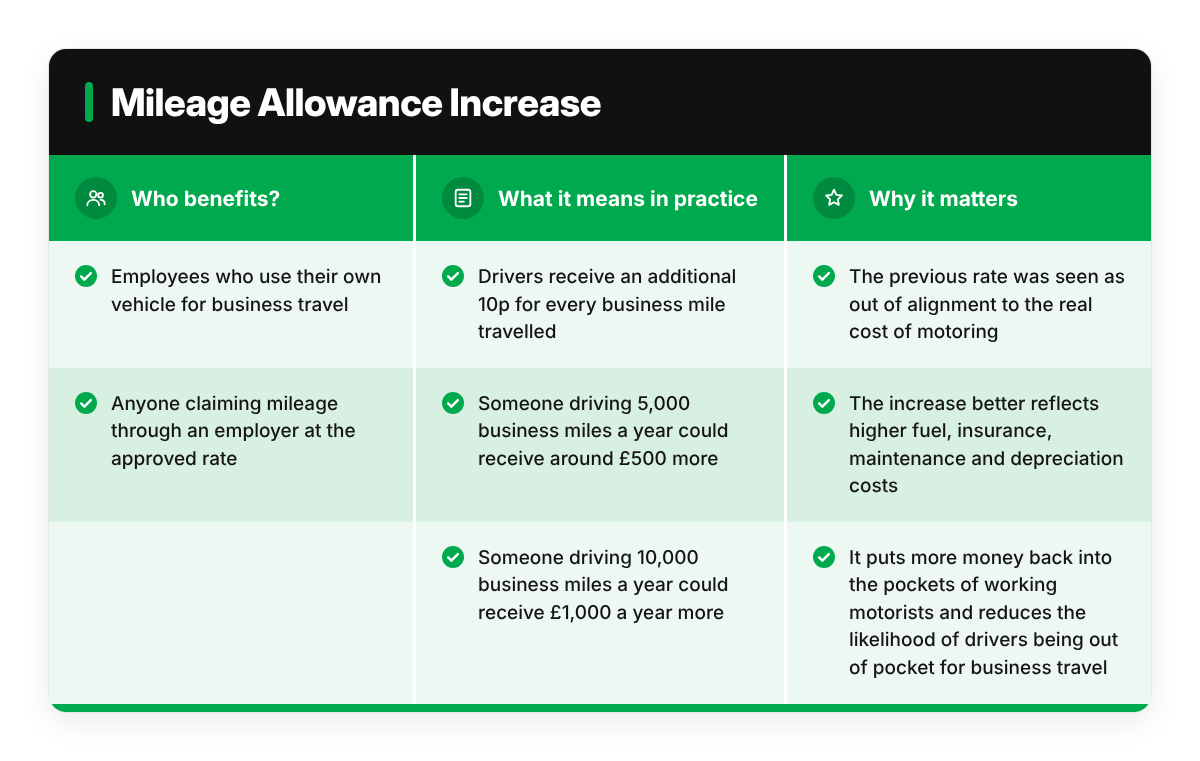
Mileage Allowance Increase
The increase in the mileage allowance from 25p to 35p per mile is a meaningful win for consumers who rely on their cars for work. For years, many drivers have felt reimbursement rates failed to keep pace with the real cost of running a vehicle, leaving them out of pocket every time they travelled for business. By increasing the rate, the government is putting more money back into the pockets of working motorists and recognising the financial reality of higher fuel, insurance, servicing and ownership costs. For thousands of drivers, it could mean hundreds of pounds extra a year at a time when household budgets remain under pressure.
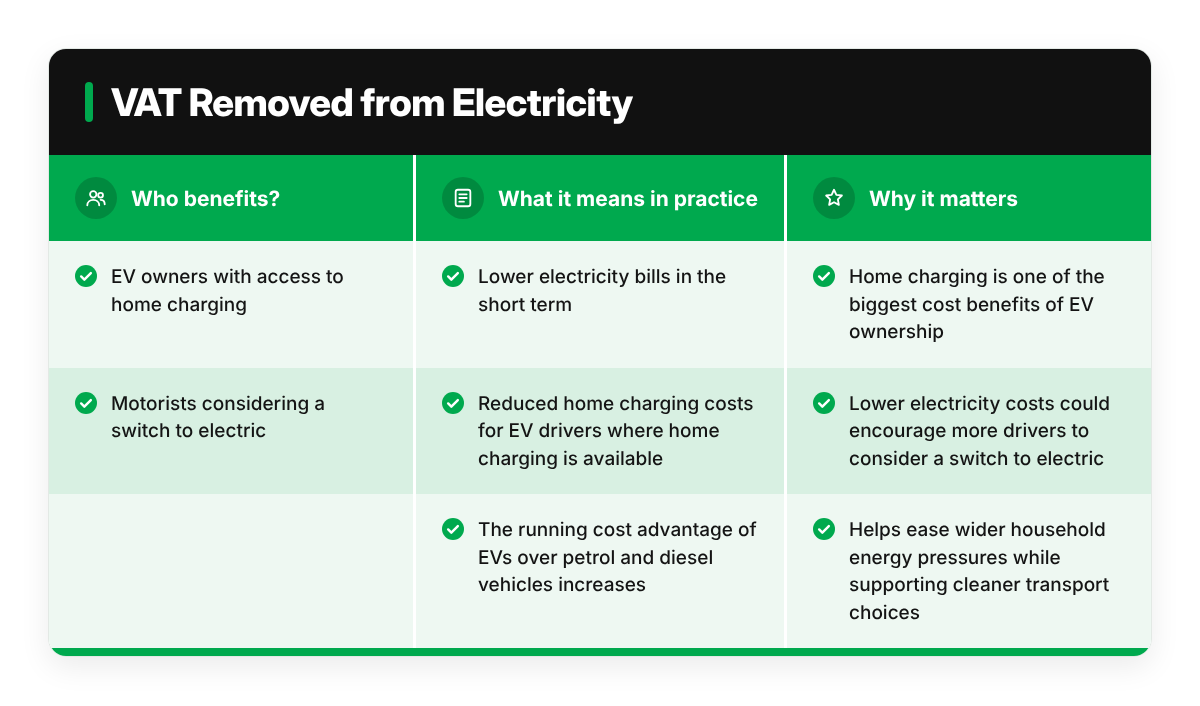
VAT Removed from Electricity
On 21st July, Prime Minister Andy Burnham announced that VAT on domestic electricity would be removed taking effect from 1st October 2026, in turn removing the VAT payable on EV home charging. The Chancellor has announced the extension of this until July 2027. Any reduction in household electricity costs will be welcomed by EV owners, particularly those who charge at home. For drivers in flats, terraced houses or anywhere without a driveway that rely on public charge points, this measure won't have an impact on them, despite a prior call for a cut to 5% would make the switch to electric more cost effective and help narrow the gap with those who can charge at home.
Taken together, the measures provide support for motorists regardless of how they travel: fuel-duty relief for petrol and diesel drivers, lower charging costs for EV owners, and higher reimbursement rates for people who rely on their own cars for work. For many households, the Budget's early announcements focus on reducing the day-to-day cost of getting around rather than introducing major new transport taxes or charges.
What was missing?
While the Budget included measures affecting the day-to-day cost of motoring, there were no announcements on several longer-term policies that motorists and the automotive sector have been monitoring.
No changes were announced to the Electric Car Grant, company car tax rates for electric vehicles, or the Expensive Car Supplement. As a result, the existing arrangements for EV purchase incentives, Benefit-in-Kind taxation and luxury car tax thresholds remain unchanged based on the information released so far.
There was also no update on the proposed pay-per-mile tax for electric vehicles, which is currently scheduled for introduction from 2028 under previously announced plans. The absence of any announcement means there is no change to the existing timetable or published rates, although the government's longer-term approach to replacing fuel duty revenues remains unclear.
Having bought more than five million vehicles over the past 20 years, webuyanycar has a unique view of how government policy, taxation and consumer incentives influence driver behaviour and the wider used car market. While this Budget included several measures affecting the day-to-day cost of motoring, there was little clarity on some of the longer-term policies that could shape vehicle ownership in the years ahead. We'll be paying particularly close attention to any future developments around EV taxation and the proposed pay-per-mile scheme, as changes of this nature have the potential to influence purchasing decisions, vehicle values and the pace of the transition to electric motoring.