



How does the brake horsepower check tool work?
Our BHP check tool refers to vehicle specification data to confirm the brake horsepower (BHP) of UK-registered vehicles by reg number.
How do I check the brake horsepower of my car?
The simplest way to check your car’s BHP is to enter its registration number into our free BHP check tool. (This should work for all UK-registered vehicles.
Alternatively, check the statistics for the relevant car model on the manufacturer’s website. If the manufacturer cites the engine power in a different metric such as horsepower (PS) or kilowatts (kW), you can use our free car power converter tool to convert this measurement into BHP.
BHP and electric vehicles
Just like the combustion engine in a petrol or diesel car, an electric car’s motor produces power that sets its wheels in motion. Brake horsepower can be used to measure the power input of both internal combustion engines and electric motors.
However, an electric motor delivers power to the wheels in a different way. In many electric cars, the motor is fitted where the engine would sit in a combustion engine model. The electric motor transfers power to the wheels through a drive shaft.
Different types of electric motors or combustion engines can produce varying levels of power at a certain horsepower rating. For example, an electric motor may provide more torque than an internal combustion engine with the same horsepower.
If you are considering whether to buy an electric car, brake horsepower ratings will give you a good indication as to how quickly each model can accelerate - and how much torque they have available to travel uphill and overtake other vehicles.
Just as with combustion engine cars, the higher the brake horsepower an electric vehicle has, the more powerful it is.
You might see an electric car’s power cited in the horsepower (PS) or kilowatts (kW) metrics. If you are curious to see the brake horsepower (BHP) for a specific model, try using our car power converter.
Frequently asked questions
BHP is a measure of a car’s performance, directly affecting its acceleration and overall power. The importance of BHP depends on your driving needs. For example, lower BHP is usually sufficient for city driving in stop-start traffic, while higher BHP can make regular motorway driving smoother and help you maintain speed more comfortably.
Higher BHP cars are also better suited to performance driving, which tends to appeal to enthusiasts who prioritise power and torque.
A car’s V5C logbook usually lists the engine power in kW, which can then be converted to BHP. You can do this using our free Car Power Converter tool, which can quickly calculate your car’s BHP from its kW figure.
High BHP cars usually command higher insurance premiums, as they are often faster and more powerful, which translates to greater repair and replacement costs. They may also sit in higher car insurance groups than low BHP models.
As many high BHP models are capable of faster speeds, insurers consider drivers to be at greater risk of accidents. Their sheer power can also increase the damage done to the car (and others) in the event of a crash.
Brake horsepower (BHP) is a measurement of engine power.
BHP refers to a car’s horsepower (PS) minus the power lost from friction between its tyres and the road.
- Get your free online valuation.
- Book your appointment at any of our 550+ branches.
- Sell your car.
Our service is completely free to use, with no obligation to sell.
For a free online valuation:
- Enter your vehicle’s registration and mileage, followed by your email address, postcode and mobile number.
Your online valuation will be guaranteed for . This gives you the flexibility to book an appointment at a time that works for you and protects you from market fluctuations.
Booking an appointment:
- After receiving your online valuation, choose your preferred branch and select an appointment date and time.
- From here, enter your name, then check that the contact details displayed are correct.
- Confirm your booking.
Selling your vehicle:
- Arrive at your chosen webuyanycar branch at your pre-booked appointment time.
- Our purchaser will inspect your vehicle and conduct a short test drive before offering you a price.
- If you’re happy for us to buy your car, our purchaser will help you complete all the necessary paperwork.
BHP is measured using a brake dynamometer in a specific location (e.g. the crankshaft, rear axle, rear wheels or the transmission’s output shaft).
Unlike horsepower, BHP takes frictional power loss into account – and therefore BHP is always slightly lower than horsepower.
Horsepower (PS), BHP and kilowatts (kW) are all commonly used measurements of engine power. Here is a quick guide to how they each are calculated:
- Horsepower (PS) is an imperial unit of power referring to the power required to move 550 pounds one foot in one second (or to move 33,000 pounds one foot in one minute). It measures how much power is sent to the wheels (including any power that is lost from friction).
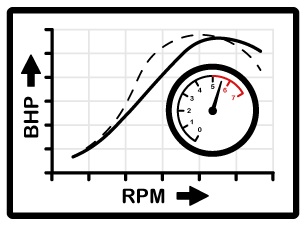
- Brake horsepower (BHP) refers to how much ‘useful’ power an engine can deliver (which excludes any power that is lost to friction). The formula for calculating BHP is: Torque x RPM (Revolutions per minute) ÷ 5,252.
- Kilowatts (kW) is a measurement of power that can be calculated with the following formula: Torque x RPM ÷ 9.5488.

We’re rated ‘Excellent’ on Trustpilot
Data presented in webuyanycar car, tax and MOT check contains public sector information licensed under the Open Government Licence v3.0 of which we assume is correct at the time of presentation to the consumer.